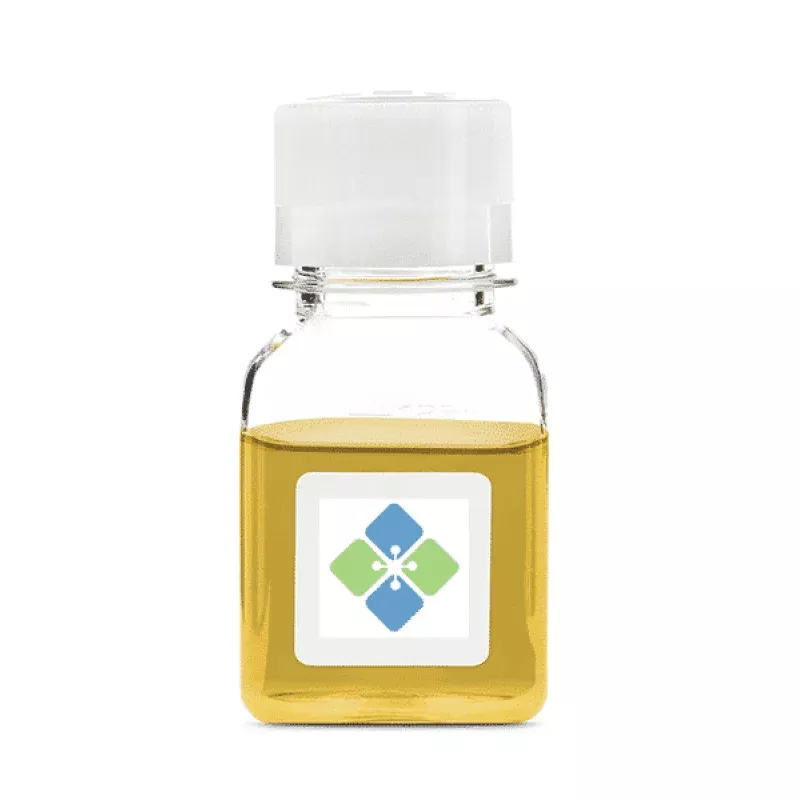
Human K2 EDTA Plasma Pooled Research Use Only
Human K2 EDTA Plasma Pooled is a biotechnology-grade pooled human plasma matrix collected from multiple healthy donors and anticoagulated with dipotassium EDTA (K2 EDTA). Supplied as a 50 mL liquid, this matrix provides a consistent, low-variability biological background ideal for assay development, calibration, surrogate matrix validation, pharmacokinetic studies, and biomarker quantification in LC-MS/MS, immunoassays, and other analytical workflows.
| Catalog | B2014053 |
| Lot | Batch dependent |
| Expiration | Batch dependent |
| Amount | 50 mL |
| Molecular Weight / Concentration | Not applicable |
| Supplied As | Plasma |
| Applications | LC-MS/MS method development, surrogate matrix validation, pharmacokinetic profiling, biomarker quantification, immunoassay calibration, and interference testing |
| Storage | 20C |
| Keywords | Human K2 EDTA Plasma, Pooled, Unfiltered STD -ve |
| Grade | Biotechnology grade; filtered through 0.22 m; prepared with Type I ultrapure water (resistivity>18 Mcm) |
Scientific Overview
K2 EDTA plasma is the preferred matrix for many clinical chemistry, pharmacokinetic, and biomarker assays because EDTA effectively chelates calcium ions, preventing coagulation while preserving a wide range of analytes including peptides, proteins, metabolites, and small molecules. Pooling from multiple donors minimizes individual donor variability, providing a consistent and representative human plasma background for assay validation, calibration curves, quality control samples, and interference studies.
This Human K2 EDTA Plasma Pooled is suitable for:
- LC-MS/MS method development and validation using surrogate matrix approaches
- Pharmacokinetic (PK) and toxicokinetic (TK) studies
- Biomarker quantification and immunoassay calibration
- Evaluation of matrix effects and interference in analytical workflows
- High-throughput sample processing in genomics, proteomics, and clinical research
Usage & Handling Guidance
Store at 20 C. Thaw on ice or at 28 C and mix gently by inversion to avoid foaming. Aliquot upon first thaw to minimize repeated freezethaw cycles. For LC-MS/MS applications, additional protein precipitation or solid-phase extraction may be required depending on the analyte and method.
- Recommended applications: LC-MS/MS, immunoassays, surrogate matrix validation, and PK studies
- Handling notes: Use protease/phosphatase inhibitors if measuring labile analytes; centrifuge briefly if particulates appear after thawing
- Stability: Stable when stored frozen; avoid prolonged exposure to room temperature
What You Get
- 50 mL Human K2 EDTA Plasma Pooled as a liquid matrix
- Consistent pooled plasma from multiple healthy donors
- Filtered through 0.22 m for reduced contamination risk
- Ready-to-use matrix for analytical method development and validation
- For research use only (RUO)
Why Researchers Choose It
- Pooled format reduces donor-to-donor variability for reproducible results
- K2 EDTA anticoagulation preserves a broad range of analytes
- Excellent surrogate matrix for LC-MS/MS and immunoassay validation
- Filtered (0.22 m) using ultrapure water standards for low background
- Convenient 50 mL volume suitable for method development and high-throughput studies
Frequently Asked Questions (FAQ)
- What anticoagulant is used and why K2 EDTA?
Dipotassium EDTA (K2 EDTA) is used to chelate calcium and prevent clotting while maintaining excellent stability for many small molecules, peptides, and proteins. - Is this plasma filtered?
Yes. It is filtered through 0.22 m membranes to reduce particulate contamination and improve assay consistency. - Can this be used as a surrogate matrix in LC-MS/MS?
Yes. It is widely used as a surrogate matrix for calibration curves and quality control samples in pharmacokinetic and biomarker assays. - How should I thaw and handle the plasma?
Thaw slowly at 28 C or on ice. Mix gently by inversion and aliquot to avoid repeated freezethaw cycles. - Is this suitable for cell culture or in vivo use?
No. This product is intended for in vitro research use only as an analytical matrix.
This product is for Research Use Only (RUO). It is not intended for diagnostic, therapeutic, or clinical use in humans or animals.
References
- Gulikers JL, et al. HPLC-MS/MS quantification of TKIs in K2 EDTA plasma. Biomed Chromatogr. 2023 Jun;37(6):e5628.
- Chadwick K, et al. Reappraisal of kEDTA sample contamination. J Appl Lab Med. 2019 May;3(6):925935.
- Yin F, et al. Surrogate matrix quantitation of uridine and L-dihydroorotic acid. J Pharm Biomed Anal. 2021 Jan 5;192:113669.
- Lippi G, et al. NT-proBNP measurement in serum vs K2 EDTA plasma. Clin Biochem. 2007 Jun;40(910):747748.
- Hepburn S, et al. Renin stability in EDTA whole blood and plasma. Clin Chem Lab Med. 2022 Jul 4;60(9):13841392.
- Hussain S, et al. High-throughput rosuvastatin analysis in K2 EDTA plasma. Bioanalysis. 2009 Jun;1(3):529535.
- Sheng H, et al. Sample type effects on procalcitonin detection. Clin Lab. 2022 Feb 1;68(2).
- Roseboom IC, et al. UPLC-MS/MS quantification of paromomycin. J Pharm Biomed Anal. 2020 Jun 5;185:113245.
- Tripathy S, et al. Enantioseparation of abrocitinib metabolite. Bioanalysis. 2021 Oct;13(19):14771486.
- Zheng X, et al. UPLC-MS/MS quantitation of Vorolanib and metabolite. J Pharm Biomed Anal. 2021 May 30;199:114034.