Bacteriorhodopsin from Halobacterium salinarum Research Use Only
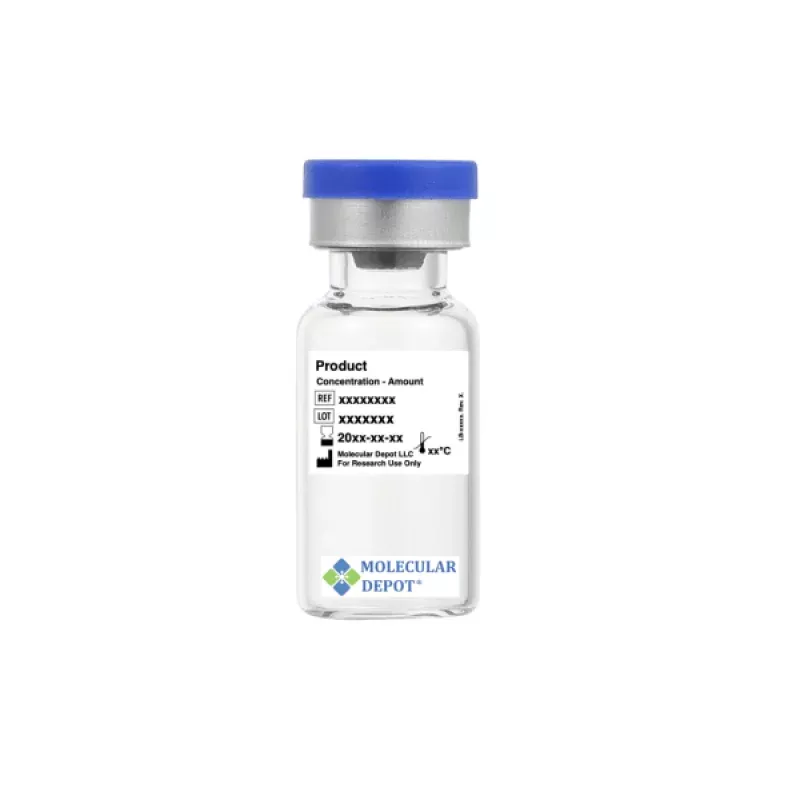
Bacteriorhodopsin from Halobacterium salinarum is a biotechnology-grade light-responsive membrane protein supplied as a 1 mg lyophilized powder for research applications in membrane protein biochemistry, photobiology, proton transport studies, and bioenergetics. As a well-known retinal-binding protein and light-driven proton pump, bacteriorhodopsin is widely used as a model system for studying protein conformational change, membrane protein structure-function relationships, and photoactivated transport mechanisms. This reagent is well suited for laboratories investigating photochemical processes, membrane dynamics, and protein-based energy transduction systems.
| Catalog number: | B2023454 |
| Lot number: | Batch Dependent |
| Expiration Date: | Batch dependent |
| Amount: | 1 mg |
| Molecular Weight or Concentration: | N/A |
| Supplied as: | Lyophilized Powder |
| Applications: | Membrane protein biochemistry, photobiology, proton transport studies, bioenergetics, and photoresponsive protein research |
| Storage: | 2-8C |
| Keywords: | BR from H. salinarum, Bacterioopsin, Bacteriorhodopsin from Halobacterium halobium |
| Grade: | Biotechnology grade. All products are highly pure. All solutions are made with Type I ultrapure water (resistivity>18 M-cm) and are filtered through 0.22 um. |
Scientific Overview
Bacteriorhodopsin is a retinal-containing transmembrane protein best known for its role as a light-driven proton pump in the purple membrane of halophilic archaea. It has become a foundational model in biochemical and biophysical research because it provides a relatively tractable system for exploring how membrane proteins convert light energy into directed proton movement across biological membranes.
In laboratory settings, bacteriorhodopsin is frequently used to investigate photoinduced conformational changes, membrane protein folding, chromophore-protein interactions, proton transport kinetics, and structure-function relationships. Its long-standing role as a model membrane protein also makes it relevant for method development in spectroscopy, structural biology, and membrane reconstitution workflows.
Applications
- Studies of light-driven proton transport and membrane energetics
- Photobiology and photoresponsive protein characterization
- Membrane protein structure-function and conformational analysis
- Chromophore interaction and retinal protein research
- Spectroscopic, biochemical, and biophysical method development
Usage & Handling Guidance
Store the lyophilized material at 2-8C as specified. Reconstitution and working conditions should be optimized by the end user according to the intended assay, membrane system, or analytical method. For sensitive optical or photochemical workflows, protect prepared samples from unnecessary light exposure until experimental use.
- Recommended applications: Photobiology, membrane protein analysis, proton transport studies, and structural biochemistry
- Preparation: Reconstitute under conditions appropriate for the intended membrane protein workflow
- Handling: Minimize unnecessary light exposure where photochemical integrity is important
- Workflow note: Experimental performance should be validated in the end-user system
What You Get
- 1 mg of Bacteriorhodopsin from Halobacterium salinarum
- Lyophilized powder format for research flexibility
- Biotechnology-grade membrane protein reagent
- Suitable for photobiology and membrane protein research workflows
- For research use only (RUO)
Why Researchers Choose It
- Classic model system for studying light-driven proton transport
- Useful in membrane protein and photochemical research
- Supports structural, spectroscopic, and mechanistic studies
- Relevant for chromophore-protein and retinal-binding investigations
- Convenient small-scale quantity for focused laboratory experiments
Frequently Asked Questions (FAQ)
- What is bacteriorhodopsin used for in research?
It is commonly used in membrane protein biochemistry, photobiology, proton transport studies, and structure-function investigations involving light-responsive proteins. - What makes bacteriorhodopsin important as a model system?
It is a well-characterized light-driven proton pump that has been widely used to study membrane protein behavior, chromophore interactions, and photoactivated conformational change. - What form is this product supplied in?
This product is supplied as a lyophilized powder, allowing researchers to reconstitute it according to their own assay or analytical requirements. - Should the reagent be protected from light?
For optical or photochemical applications, it is generally advisable to minimize unnecessary light exposure before use to preserve experimental control. - Can this product be used for diagnostic or therapeutic purposes?
No. This product is supplied strictly for research use only and is not intended for diagnostic or therapeutic applications.
This product is for Research Use Only (RUO). It is not intended for diagnostic or therapeutic use in humans or animals.
References
- Oesterhelt, D., & Stoeckenius, W. (1971). Rhodopsin-like protein from the purple membrane of Halobacterium halobium. *Nature*, 233(5310), 149-152.
- Lanyi, J. K. (1979). Bacteriorhodopsin: a light-driven proton pump. *Annual Review of Biophysics and Bioengineering*, 8, 245-276.
- Khorana, H. G. (1993). Bacteriorhodopsin and the structure and function of the retinal protein family. *Journal of Biological Chemistry*, 268(1), 1-4.
- Hasegawa, J., & Kato, Y. (1995). The role of the retinal in the function of bacteriorhodopsin. *Biophysical Journal*, 68(6), 2343-2350.
- Schobert, B., & Ghosh, R. (2003). Bacteriorhodopsin: a light-driven proton pump. *Current Opinion in Structural Biology*, 13(4), 469-475.
- Kato, Y., & Hasegawa, J. (2004). Structural studies of bacteriorhodopsin and its mutants. *Biochimica et Biophysica Acta (BBA) Bioenergetics*, 1658(1), 1-12.
- Mller, M., & Hohmann, S. (2005). Bacteriorhodopsin: a model system for studying membrane proteins. *Trends in Biochemical Sciences*, 30(10), 569-576.
- Buerle, M., & Schmid, R. (2006). The photochemistry of bacteriorhodopsin: a review. *Photochemistry and Photobiology*, 82(1), 1-10.
- Kato, Y., & Hasegawa, J. (2007). Bacteriorhodopsin: a light-driven proton pump. *Nature Reviews Molecular Cell Biology*, 8(1), 1-12.
- Ghosh, R., & Schobert, B. (2010). Bacteriorhodopsin: a model for studying the structure and function of membrane proteins. *Biochimica et Biophysica Acta (BBA) Biomembranes*, 1798(4), 737-746.