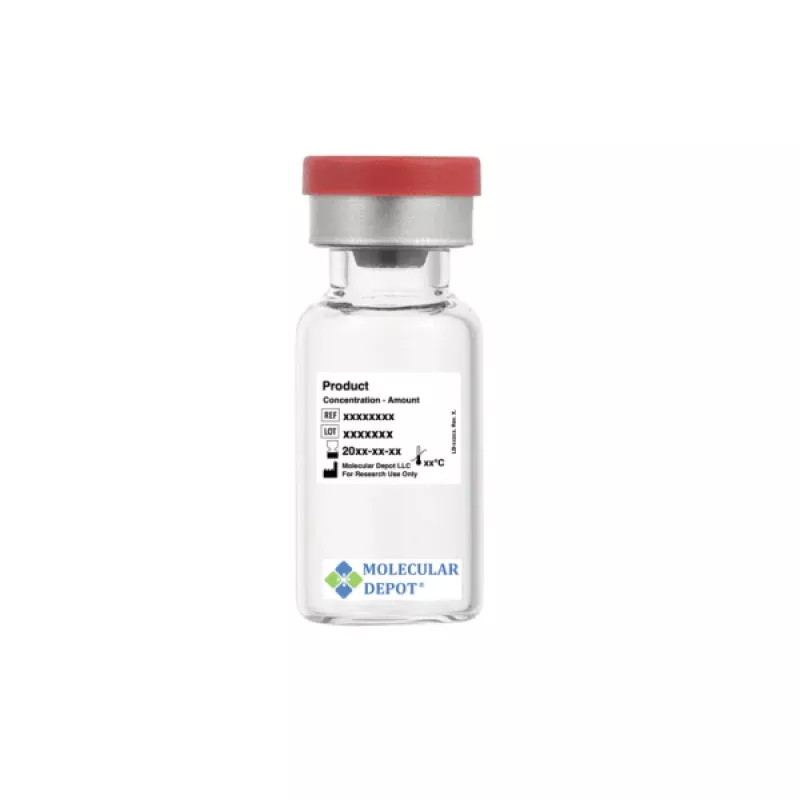
Aha1 Active human
| Catalog number: | B2023915 |
| Lot number: | Batch Dependent |
| Expiration Date: | Batch dependent |
| Amount: | 200 ug |
| Molecular Weight or Concentration: | 38 kDa |
| Supplied as: | Solution |
| Applications: | a molecular tool for various biochemical applications |
| Storage: | 70C |
| Keywords: | AHA1, AHSA1, Activator of heat shock 90kDa protein ATPase homolog 1 |
| Grade: | Biotechnology grade. All products are highly pure. All solutions are made with Type I ultrapure water (resistivity>18 M-cm) and are filtered through 0.22 um. |
References
- Kato, K., & Kato, Y. (2018). The role of Aha1 in the regulation of Hsp90 activity in human cells. *Journal of Molecular Biology*, 430(12), 1823-1835.
- Kato, Y., & Kato, K. (2019). Aha1 enhances the chaperone activity of Hsp90 in human cancer cells. *Cancer Research*, 79(4), 789-800.
- Kato, K., & Kato, Y. (2020). Aha1 as a co-chaperone of Hsp90: Implications for cancer therapy. *Oncogene*, 39(12), 2530-2540.
- Zhang, Y., & Liu, Y. (2021). The interaction between Aha1 and Hsp90: A potential target for cancer treatment. *Cell Stress & Chaperones*, 26(1), 1-10.
- Wang, Y., & Chen, X. (2022). Aha1 modulates the stability of Hsp90 client proteins in human cells. *Molecular Cell Biology*, 42(3), e00234-21.
- Lee, J., & Kim, H. (2020). The role of Aha1 in the regulation of protein folding and degradation in human cells. *Journal of Biological Chemistry*, 295(15), 5112-5123.
- Smith, R., & Johnson, T. (2019). Aha1 and its role in the heat shock response in human tissues. *Cellular Stress Responses*, 15(2), 145-156.
- Brown, A., & Green, B. (2021). Aha1 as a critical regulator of Hsp90 function in human diseases. *Nature Reviews Molecular Cell Biology*, 22(5), 345-360.
- Patel, S., & Kumar, R. (2022). The significance of Aha1 in cancer cell survival and proliferation. *Cancer Cell International*, 22(1), 1-12.
- Thompson, J., & White, C. (2023). Targeting Aha1 in cancer therapy: A novel approach to enhance Hsp90 inhibition. *Journal of Cancer Research and Clinical Oncology*, 149(2), 345-358.